
Industry News
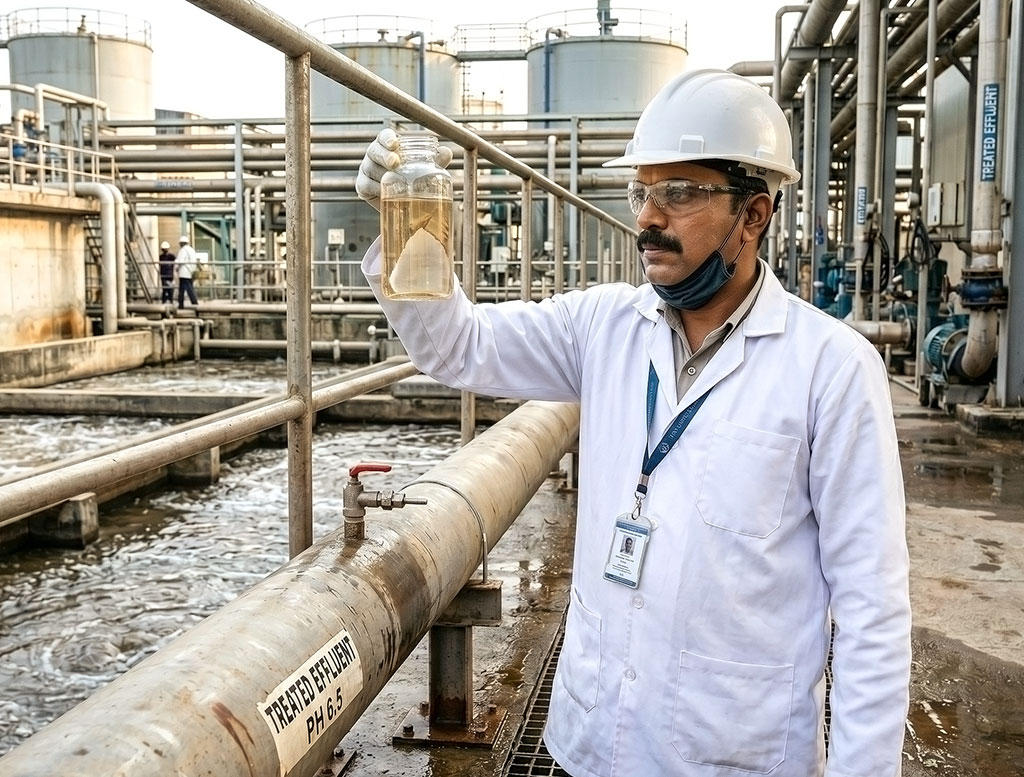
Water quality problems in industrial facilities rarely begin as major failures. More often, they start quietly, with a rise in dissolved solids, an imbalance in pH, early corrosion activity, bacterial growth or scale beginning to form where it should not. Left unchecked, these issues can reduce heat transfer efficiency, damage equipment, disrupt production and increase maintenance costs. That is why industrial water testing should not be treated as a routine formality. It is a control measure that protects both the system and the operation.
A good water testing program gives facilities a clear picture of how water is behaving inside cooling towers, boilers, chillers, closed-loop systems and process lines. It helps identify chemical imbalance, contamination and microbiological risks before they turn into operational problems. More importantly, it allows maintenance teams to act based on condition rather than after failure. In practice, that is where the real value lies.
In many plants, water touches some of the most critical parts of the operation. It is used for cooling, heat transfer, cleaning, processing and utility support. If water chemistry is not properly monitored, even a well-designed system can begin to lose efficiency over time. Corrosion may attack metal surfaces, scale may insulate heat exchangers, and bacterial growth may foul lines and create hygiene concerns.
A structured checklist helps ensure that key parameters are tested consistently and interpreted in context. It also creates trends, which are often more useful than one-off readings. A single test result may show where the water stands today. A trend shows where the system is heading..
The exact test slate will depend on the application, but the following parameters form the backbone of a strong industrial water testing program.
pH is one of the first parameters that should be checked in any facility water system. It indicates whether the water is acidic, neutral or alkaline and has a direct impact on corrosion risk, chemical treatment performance and scale tendency.
If pH falls too low, metal surfaces may become more vulnerable to corrosion. If it rises too high, deposition and scale-related issues may become more likely. In most systems, pH is not interpreted alone; it is read alongside alkalinity, hardness and conductivity to understand the full water balance.
Conductivity gives a quick indication of the ionic content of the water and is commonly used as a control parameter in industrial systems. It is particularly useful in cooling towers and process water systems where dissolved salts can build up over time.
A rising conductivity trend may indicate concentration of dissolved solids, contamination ingress or inadequate bleed-off control. While conductivity does not identify the specific dissolved substances present, it is one of the fastest ways to tell whether the water chemistry is moving out of range.
TDS represents the total concentration of dissolved minerals, salts and small amounts of organic matter in the water. High TDS can affect scaling tendency, water reuse suitability and overall system performance.
In practical terms, TDS helps facilities understand the dissolved load the system is carrying. When used with conductivity and hardness, it provides a stronger view of whether the water is likely to cause deposits, interfere with treatment chemistry or stress equipment surfaces.
Hardness is one of the most important parameters in industrial water testing because it is closely tied to scale formation. High hardness means the water contains elevated levels of calcium and magnesium, which can precipitate out and form deposits on heat transfer surfaces, pipes and cooling equipment.
In heat exchange systems, even a relatively thin scale layer can reduce efficiency and increase energy demand. Tracking total hardness and calcium hardness helps facilities assess scale risk early and determine whether softening or treatment adjustment is required.
Alkalinity indicates the water’s buffering capacity — in other words, its ability to resist changes in pH. It plays a major role in water stability and is often used in conjunction with pH and hardness when evaluating corrosion and scale potential.
If alkalinity is too low, the system may become chemically unstable and more prone to pH swings. If it is too high, deposition risk may increase depending on the operating conditions. This is why alkalinity is a core control parameter in many boiler, cooling and process systems.
Chloride is an important contamination and corrosion indicator, especially in systems where metal integrity is critical. Elevated chloride levels can accelerate corrosion, particularly in stainless steel and other sensitive alloys.
For facilities, rising chloride often points to contamination ingress, poor make-up water quality or concentration issues within the system. It is a small parameter with large significance, especially where long-term asset protection matters.
Sulfate is another dissolved ion that can contribute to corrosion and scaling problems, depending on the system conditions and water chemistry. It is not always the first parameter people look at, but in many industrial environments, it plays a useful supporting role in understanding water quality.
Where sulfate is consistently elevated, it may indicate raw water influence, chemical contamination or the need for closer monitoring of deposits and metal condition.
Silica is particularly important in systems exposed to heat, such as boilers and some high-temperature process applications. It can form hard, stubborn deposits that are difficult to remove and highly disruptive to heat transfer efficiency.
Because silica-related fouling can be difficult and expensive to correct, it is much better managed through routine testing and early control.
Iron and copper in the water are often indirect signs of system distress. They may indicate active corrosion somewhere in the loop, pipework or equipment. These metals are especially useful in closed-loop systems, chillers and treated industrial circuits where corrosion products should ideally remain low and stable.
A rising iron or copper trend should not be ignored. It may be the first evidence that protective chemistry is failing or that corrosion has already begun to accelerate.
Industrial water systems, especially cooling towers and open recirculating systems, can support bacterial growth, slime formation and biofilm development if not properly controlled. Microbiological testing is essential for identifying this risk before it leads to fouling, under-deposit corrosion or health concerns.
Common checks include Total Bacterial Count and, where relevant, Legionella risk indicators. For many facilities, biological control is one of the most overlooked parts of water management until it becomes a visible problem.
Where water treatment chemicals are being used, it is not enough to assume they are working. Inhibitor levels should be checked to confirm that treatment concentration is within target range and that the system is receiving the protection it was designed to have.
This is especially important in closed-loop chilled water systems, engine cooling circuits and industrial loops where chemical treatment is central to long-term reliability.
Not every useful test is complex. Changes in water appearance, odor, turbidity or suspended solids can provide early signs of contamination, process upset, biological activity or corrosion by-products.
Visual condition should never replace laboratory analysis, but it often adds context and sometimes provides the first warning that something in the system has changed.
Testing frequency depends on the type of system, the criticality of the process and the stability of the water chemistry. High-risk systems such as cooling towers may require more frequent checks, while stable closed-loop systems may be monitored less often. The important point is consistency.
The best testing schedule is one that creates meaningful trends, captures early deviations and allows corrective action before performance begins to suffer.
A properly managed industrial water testing program helps facilities reduce the likelihood of:
In other words, the checklist is not just about water. It is about protecting uptime, efficiency and asset life.
Industrial water systems perform best when their chemistry is understood, monitored and controlled. A structured testing checklist helps facilities move from reactive correction to preventive action, giving operators the information they need before water-related issues begin affecting performance.
Atlas Lab provides comprehensive industrial water testing and analysis services for cooling towers, chillers, process water systems and other facility applications. From core chemistry parameters to microbiological testing and corrosion monitoring, our services are designed to help facilities maintain control, improve efficiency and protect critical equipment.
Reach out to Atlas Lab for reliable industrial water testing tailored to your facility’s operating requirements.
Phone :+91 9324631646
WhatsApp : +91 9324631646
Email : contact@atlaslab.in
The cement industry operates under some of the harshest conditions in industrial manufacturing. Equipment such as rotary kilns, vertical roller mills,
Read more about Lube Oil Testing for the Cement Industry
The steel industry operates some of the most demanding and high-load machinery in the industrial sector. Equipment such as blast furnaces,
Read more about Lube Oil Testing for the Steel Industry